Games
Beyond Entertainment: How Video Games Are Designed to Keep Players Engaged
Game designers combine rules, feedback, difficulty and player choice to create engaging experiences, while monetisation and accessibility shape how games are played.
By BubblesEdiy News Desk · Published · Updated
Transparency: this article was written with AI assistance and published by BubblesEdiy. Found an error? See our Corrections Policy.
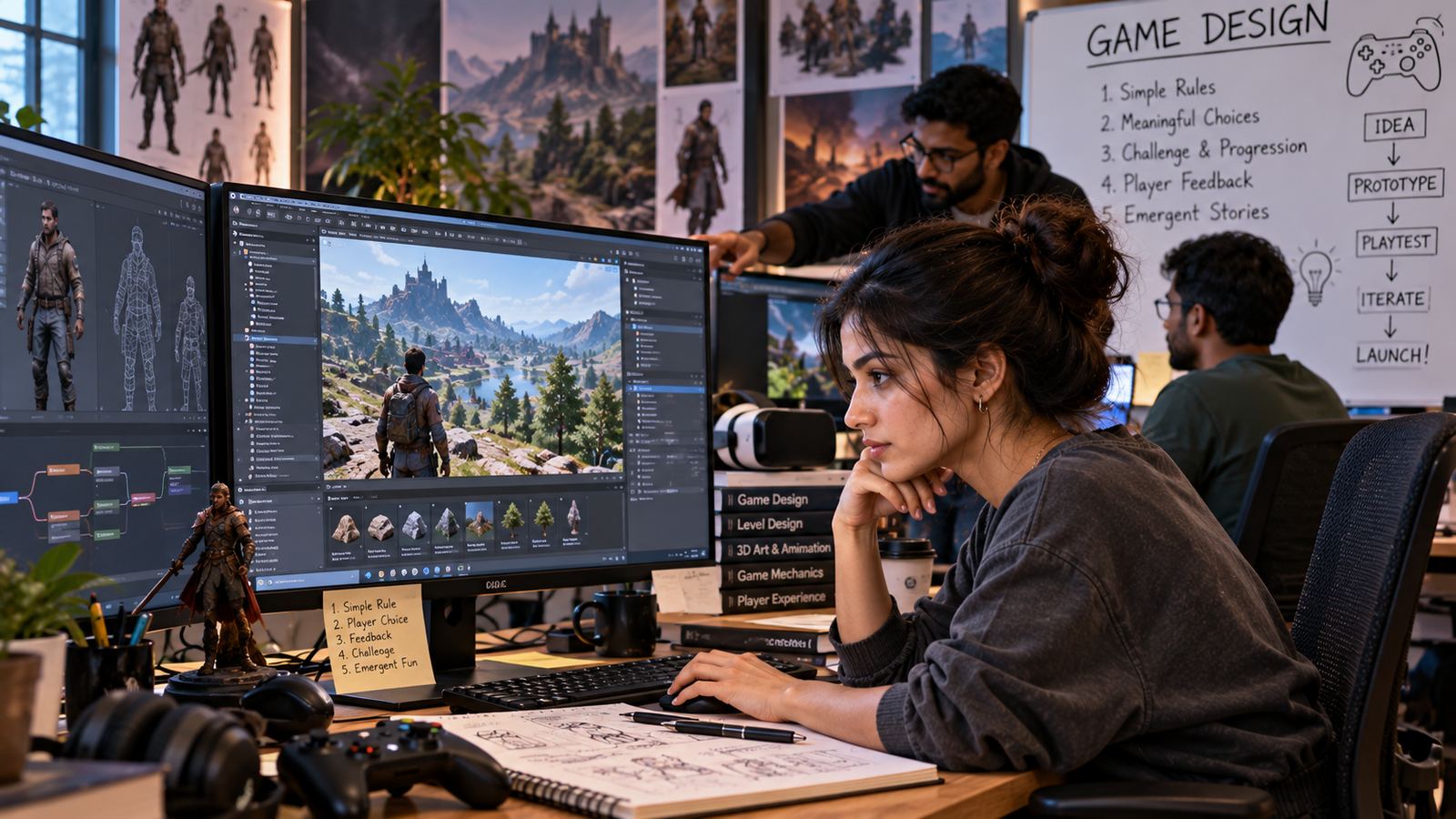
Image: BubblesEdiy photo library
A video game can begin with a simple idea: move a character, solve a puzzle or compete against another player. Turning that idea into an experience people want to revisit requires careful design. Developers build systems of rules, goals, feedback and challenges that help players understand what they can do and see how their decisions affect the game world.
Feedback is one of the most important design tools. A sound, animation or change in the environment can show that an action succeeded or that a player needs to try another approach. Difficulty also matters. A game that explains everything too quickly may feel repetitive, while one that introduces too many unfamiliar systems at once can become frustrating. Playtesting helps developers identify where players struggle and whether the intended experience is actually working.
Different genres use these principles in different ways. Puzzle games reward experimentation, strategy games require planning, and multiplayer titles add competition, cooperation and social interaction. Online games must also manage network performance, fair play, moderation and updates. Accessibility options, including adjustable controls, subtitles and difficulty settings, can help more people participate.
The business model can influence the player experience as much as the mechanics. Games may be sold upfront, offered through subscriptions or supported by advertising and in-game purchases. These approaches can fund ongoing development, but unclear pricing or aggressive monetisation can damage trust. Players benefit from understanding purchase terms, protecting account details and setting spending limits where appropriate.
For developers, the strongest measure of engagement is not simply how long someone stays online. It is whether the game delivers a worthwhile experience, respects players and provides reasons to return without relying on manipulation. For players, understanding the design behind a game can make its creative and technical achievements easier to appreciate. Successful games bring rules, storytelling, technology and meaningful choices together into a coherent experience.
Credits
- Image: BubblesEdiy photo library
- Written by BubblesEdiy News Desk, with AI assistance
About the Author
The BubblesEdiy News Desk byline is used for articles prepared and published by BubblesEdiy. Some articles are drafted with AI assistance and are labelled. Author profile
Related News

Notable game releases this week (20 Oct 2026)
8 notable video games were released in the last week, according to RAWG.
BubblesEdiy News Desk ·
Read more
New open-source software releases (20 Oct 2026)
1 well-known open-source projects published new versions in the last three days.
BubblesEdiy News Desk ·
Read more
Chennai air quality today (20 Oct 2026)
Chennai's air quality index is 25 (Good).
BubblesEdiy News Desk ·
Read more