World
How Disruptions in Global Supply Chains Reach Everyday Consumers
Shipping delays, energy costs and trade restrictions can influence local prices, revealing how closely everyday purchases depend on global supply chains.
By BubblesEdiy News Desk · Published · Updated
Transparency: this article was written with AI assistance and published by BubblesEdiy. Found an error? See our Corrections Policy.
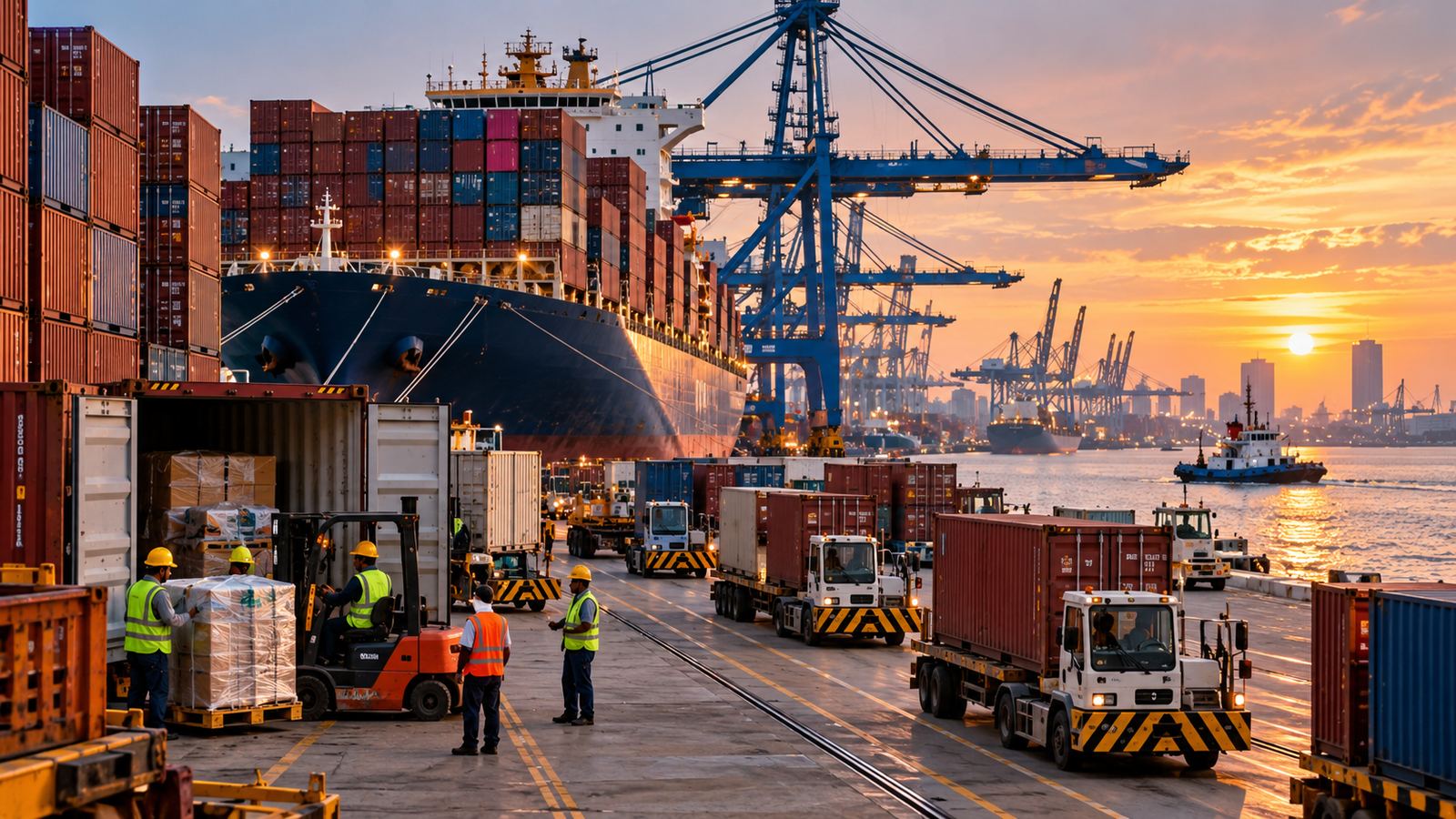
Image: BubblesEdiy photo library
A product sold in a local shop may depend on raw materials, components and transport services from several countries. Modern supply chains connect factories, ports, warehouses, shipping companies and retailers, allowing businesses to source goods internationally. That interconnected system can also transmit disruptions from one region to another, sometimes affecting the availability and price of everyday products.
The World Trade Organization monitors developments in international trade, while the United Nations Conference on Trade and Development examines maritime transport and global shipping. Their work helps explain the importance of trade routes, port capacity and transport costs. When a major shipping route becomes difficult to use, vessels may need to take longer journeys, increasing fuel consumption, delivery times and logistical expenses.
The effects are not always immediate or uniform. Businesses may hold inventory, use alternative suppliers or rely on existing contracts to absorb temporary increases in costs. Some products have several possible sources, while others depend on specialised components that are difficult to replace. The eventual effect on consumers depends on the duration of the disruption, available alternatives, currency movements and decisions made by importers and retailers.
Companies can reduce certain risks by diversifying suppliers, improving inventory planning and identifying critical components before shortages occur. These measures also involve trade-offs: additional stock ties up capital, and alternative suppliers may charge more or require new quality checks. Governments face similar choices when balancing efficient international trade with the need for resilience in essential goods.
For consumers, understanding these connections provides a clearer explanation of why local prices and product availability can change. A delay at a distant port does not automatically cause a price increase, but it can become one factor in a wider chain of costs. Global supply chains remain valuable because they connect producers with markets; their resilience depends on preparation, reliable information and the ability to adapt when conditions change.
Credits
- Image: BubblesEdiy photo library
- Written by BubblesEdiy News Desk, with AI assistance
About the Author
The BubblesEdiy News Desk byline is used for articles prepared and published by BubblesEdiy. Some articles are drafted with AI assistance and are labelled. Author profile
Related News

Earthquakes of magnitude 4.5 or higher in the last 24 hours (20 Oct 2026)
8 earthquakes of magnitude 4.5 or above were recorded worldwide in the past day.
BubblesEdiy News Desk ·
Read more
New open-source software releases (20 Oct 2026)
1 well-known open-source projects published new versions in the last three days.
BubblesEdiy News Desk ·
Read more
Chennai air quality today (20 Oct 2026)
Chennai's air quality index is 25 (Good).
BubblesEdiy News Desk ·
Read more