Science
NASA picture of the day: NASA Science
Looking toward the north from Mullion, New South Wales, Australia, the Andromeda Galaxy never gets more than a few degrees above the horizon.
By BubblesEdiy News Desk · Published · Updated

Image: NASA Astronomy Picture of the Day (public domain)
Looking toward the north from Mullion, New South Wales, Australia, the Andromeda Galaxy never gets more than a few degrees above the horizon. During the southern hemisphere spring, Andromeda is highest in the sky around midnight though. And in this telephoto scene from October 10/11, multiple exposures were used to reveal the spiral galaxy in tantalizing detail as it climbed above rolling Australian hills. Also known as M31, the Andromeda Galaxy is one of the brightest objects in the Messier catalog, but is only visible to the unaided eye as a small, faint, fuzzy patch. Digitally tracked and stacked frames were combined with a foreground shot in the deep astro-image composite to reveal the galaxy's greater extent in planet Earth's night. In the springtime night skyscape,the closest large spiral galaxy spans nearly 6 full moons.Tomorrow's picture: pixels in space
Image and text: NASA Astronomy Picture of the Day. NASA content is generally not copyrighted; this picture carries no separate copyright notice.
Credits
- Image: NASA Astronomy Picture of the Day (public domain)
- Source: NASA APOD
- Written by BubblesEdiy News Desk
About the Author
The BubblesEdiy News Desk byline is used for articles prepared and published by BubblesEdiy. Some articles are drafted with AI assistance and are labelled. Author profile
Related News

El Niño Then and Now
Scientists are using a 35‑year satellite altimetry record to compare this year's El Niño with its strongest past occurrences.
BubblesEdiy News Desk ·
Read more
NASA’s Hubble Charts Path for Roman with Gravitational Lenses
Hubble has captured a series of gravitational‑lens images to aid future science with the Nancy Grace Roman Space Telescope.
BubblesEdiy News Desk ·
Read more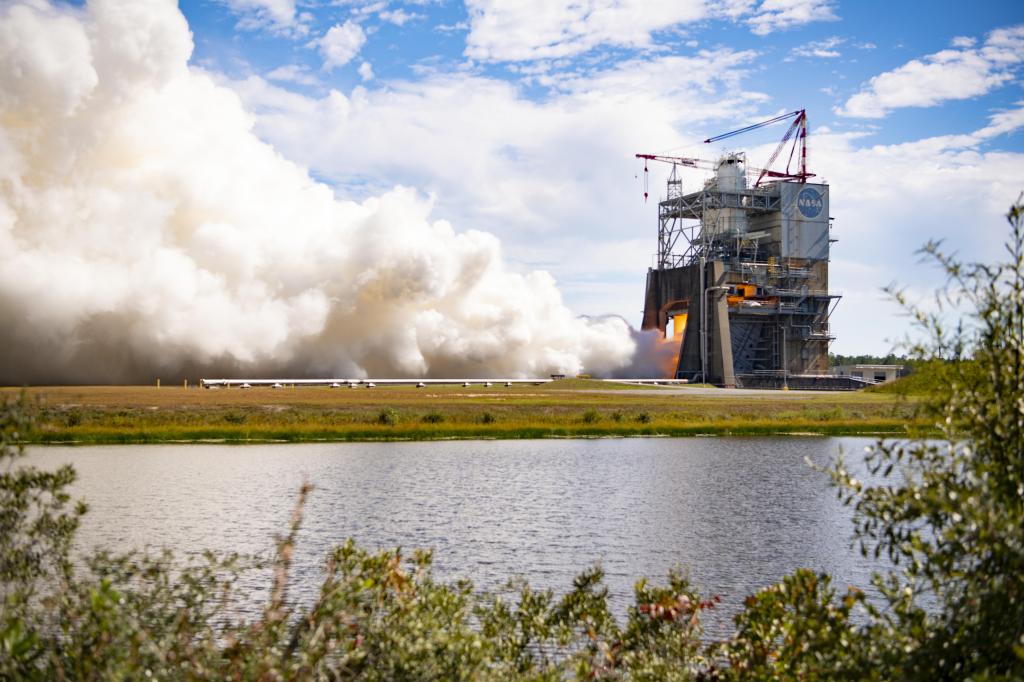
NASA Tests RS-25 Engine for Artemis Missions at Stennis Space Center
NASA fired an RS-25 engine for 500 seconds at Stennis Space Center in a test supporting Artemis missions.
BubblesEdiy News Desk ·
Read more