Music
From First Note to Final Mix: How Music Is Made in the Digital Age
Digital audio tools have expanded access to music production, but songwriting, performance, listening skills and creative decisions remain central to making a track.
By BubblesEdiy News Desk · Published · Updated
Transparency: this article was written with AI assistance and published by BubblesEdiy. Found an error? See our Corrections Policy.
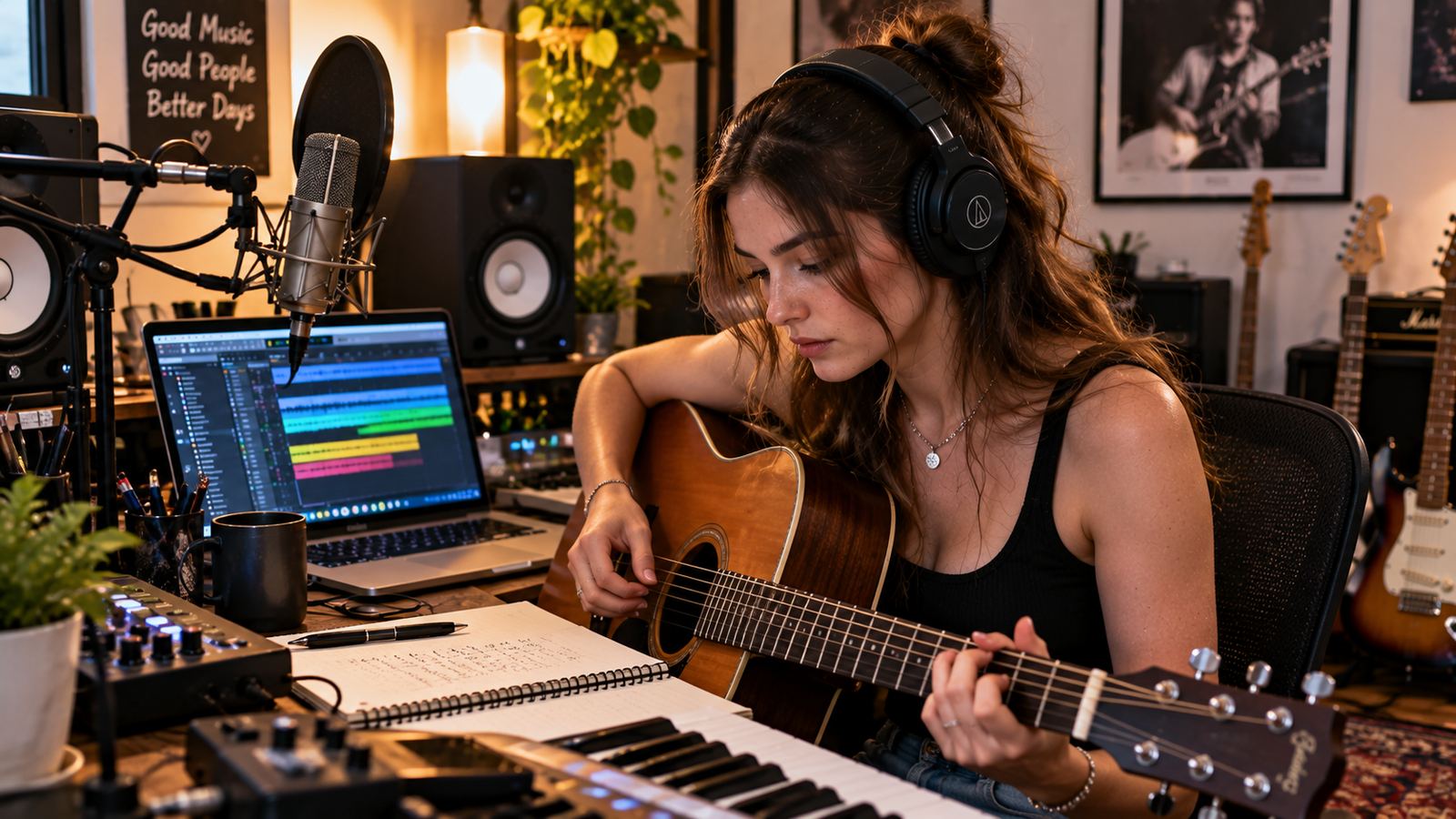
Image: BubblesEdiy photo library
A finished song may last only a few minutes, but its creation can involve many stages of work. Songwriters develop melodies and lyrics, musicians perform parts, producers shape the arrangement, and audio engineers refine the recorded sound. Digital technology has made many of these tasks possible in a home studio, although professional results still depend on skill, time and careful decisions.
A digital audio workstation, or DAW, allows creators to record, edit and arrange audio alongside virtual instruments and electronic sounds. MIDI can capture musical performance instructions, such as notes, timing and velocity, while audio recordings preserve actual sound. These tools make it easier to revise a composition, layer instruments and experiment with arrangements without repeating every step from the beginning.
Mixing is the process of balancing individual elements so that vocals, instruments and effects work together. Engineers may adjust volume, equalisation, dynamics and spatial effects to help each part fit into the overall track. Mastering then prepares the finished mix for distribution, with attention to consistency, playback compatibility and appropriate technical levels. Neither stage can automatically repair every weakness in the original performance or arrangement.
Streaming has changed how music reaches listeners, giving artists new distribution opportunities while increasing competition for attention. Independent musicians can release work without relying entirely on traditional physical distribution, but reaching audiences may still require promotion, collaboration and sustained creative output. Rights management also matters: samples, compositions and recordings can involve different permissions and ownership arrangements.
Artificial intelligence tools are adding further options for composition, editing and sound generation, raising questions about creative control, consent and copyright. Their usefulness depends on how they are applied and whether the resulting work meets artistic and legal requirements. Across changing technologies, the central task remains the same: making deliberate choices about sound, structure and expression so that a recording communicates something meaningful to its listeners.
Credits
- Image: BubblesEdiy photo library
- Written by BubblesEdiy News Desk, with AI assistance
About the Author
The BubblesEdiy News Desk byline is used for articles prepared and published by BubblesEdiy. Some articles are drafted with AI assistance and are labelled. Author profile
Related News
Trending songs today (20 Oct 2026)
The ten most-played songs on Deezer charts today.
BubblesEdiy News Desk ·
Read more
New open-source software releases (20 Oct 2026)
1 well-known open-source projects published new versions in the last three days.
BubblesEdiy News Desk ·
Read more
Chennai air quality today (20 Oct 2026)
Chennai's air quality index is 25 (Good).
BubblesEdiy News Desk ·
Read more